
The Complete Guide to Home Theater Renovations for Modern Entertainment Spaces
The first time the Morgan family hosted a movie night, everyone was excited. Popcorn filled the room, blankets covered the couch, and the latest blockbuster was ready to play. Yet within minutes, the excitement faded. Sunlight reflected off the television, dialogue was difficult to hear over echoes, and someone always had to stand up to adjust the lights. What should have felt like a cinematic experience quickly became a reminder that their living room simply wasn’t designed for immersive entertainment.
*That evening sparked an idea rather than a disappointment.* Instead of dreaming about going to the movies more often, they decided to bring the theater experience into their own home.
“Sometimes the most memorable room in a house isn’t the largest one—it’s the space where families gather, laugh, and create lasting memories together.”
What began as a search for a larger television gradually evolved into a carefully planned renovation that transformed an underused basement into a sophisticated home theater. Along the way, they discovered that exceptional entertainment spaces are built through thoughtful planning, not simply expensive equipment.
Chapter One: Discovering the Vision
The renovation began with a simple question: *What kind of experience did they actually want?*
At first, they focused entirely on technology. A projector seemed exciting. Larger speakers promised better sound. Luxury seating looked impressive online. But after speaking with design professionals, they realized the equipment itself represented only one part of the overall experience.
The room needed to feel different the moment someone walked inside.
The existing space had bright walls, exposed flooring, and large windows that flooded the room with daylight. Those features worked well for a family room but created constant distractions during movie nights. Every reflection on the screen pulled attention away from the film, while hard surfaces caused voices and sound effects to bounce around the room.
*Creating immersion required controlling what people saw just as much as what they heard.*
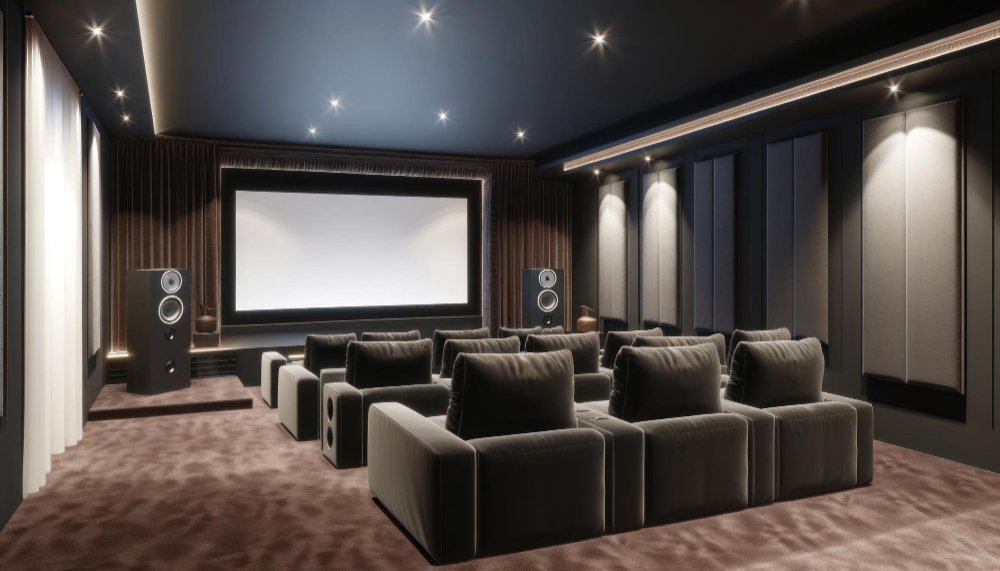
Darker finishes replaced reflective surfaces. Soft acoustic materials quietly absorbed unwanted echoes. Carefully positioned lighting eliminated glare while maintaining safe visibility throughout the room.
The family also reconsidered their seating arrangement. Instead of pushing furniture against the walls, they centered every chair around the ideal viewing angle. Suddenly, every seat became the best seat in the house.
They discovered that successful home theater renovations rarely revolve around one dramatic purchase. Instead, they emerge from dozens of carefully coordinated decisions that work together to create a seamless viewing experience.
Chapter Two: Building the Cinematic Experience
Once the foundation of the room had been established, every new addition felt intentional.
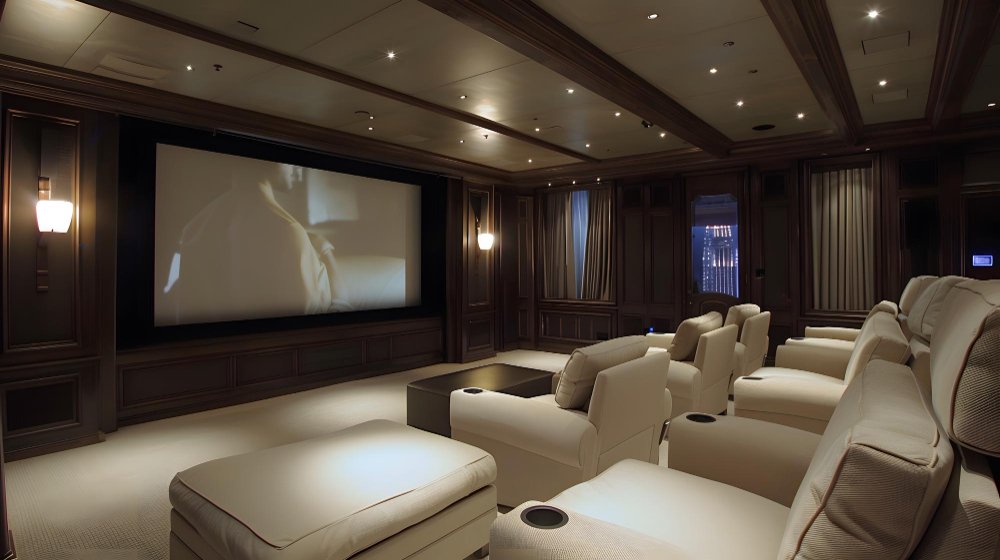
The family debated between installing a large television or choosing a projection system. After evaluating how they planned to use the room, they selected a projector with a large screen because the dedicated theater space could remain dark throughout most viewing sessions.
*The difference was immediate.*
Movies suddenly felt larger than life. Sporting events became social occasions. Video games gained a level of immersion the old family room had never provided.
“A remarkable home theater isn’t defined by its size. It’s defined by how completely it allows you to forget the outside world.”
Sound proved equally transformative.
Instead of simply purchasing larger speakers, the renovation focused on balance. Acoustic wall treatments, insulated construction, and carefully positioned surround speakers worked together to create clear dialogue and natural sound movement throughout the room. Explosions carried impact without overwhelming conversations, while quieter scenes became easier to appreciate.
Lighting became another unexpected luxury.
Rather than relying on a single ceiling fixture, the theater introduced dimmable recessed lighting, discreet LED accents, illuminated steps, and programmable lighting scenes. One button gradually dimmed the room before every movie, quietly recreating the anticipation people associate with commercial cinemas.
Hidden cabinetry concealed streaming devices, gaming consoles, and audio equipment behind clean architectural lines. Cables disappeared entirely, leaving attention focused where it belonged—the screen itself.
*Luxury often feels effortless precisely because so much thoughtful planning remains invisible.*
Chapter Three: More Than a Room
Months after the renovation was complete, the Morgan family noticed something unexpected.
The room was no longer reserved only for movies.
Children gathered there for gaming tournaments. Friends filled the seats during championship games. Quiet Sunday afternoons became opportunities to revisit favorite films, while rainy evenings naturally drew everyone downstairs together.
The renovation had quietly reshaped the rhythm of everyday life.
Comfortable seating encouraged longer conversations after the credits rolled. Intelligent climate control kept the room comfortable without distracting background noise. Automated shades and lighting made every viewing effortless, allowing technology to disappear into the background.
*Perhaps the greatest value of a thoughtfully designed home theater isn’t measured in speakers, screens, or square footage. It’s measured in the moments people choose to spend together.*
Professional planning ultimately proved to be the project’s greatest investment. Coordinating acoustics, electrical systems, ventilation, lighting, seating, and technology required expertise that ensured every individual component enhanced the overall experience rather than competing with it.
Looking back, the family rarely talks about the projector they installed or the speakers they selected. Instead, they remember birthdays celebrated during movie marathons, unforgettable championship games, and evenings that ended with everyone reluctant to leave the room.
*The renovation didn’t simply create a home theater. It created a destination within the home—a place where technology quietly supports what matters most: shared experiences that continue long after the screen goes dark.*